

A Threat is not necessarily an enemy: it is a competing organism.
Krakoa is not alone. It exists within an ecosystem of forces, populations, ideologies, predators, parasites, and aberrations that seek to occupy the same territory, consume the same resources, reproduce within the same environments, or alter the conditions necessary for its survival. In the greater ecosystem of evolution, some may not even understand that they are competing. That they are threats to Krakoan survival.
They nevertheless are.
For this reason, Krakoa does not catalogue its Threats according to allegiance. It observes them according to behavior: how they feed, how they spread, what they displace, what they produce, and what happens when they are allowed to proliferate. A Threat may be a nation, a cult, a species, a machine, or a disease. A Threat is defined by its reach, where it establishes itself, what it consumes, what it changes, and what it leaves behind.
Some Threats hunt Krakoa, while some seek to infiltrate it, reproduce within it, or make themselves indispensable to it. Some appear to be doing nothing at all, but they all compete with it. That is the difficult reality the leadership - even if not the entirety of the population of Krakoa - has come to terms with. Some Threats are not aware of the danger they pose to Krakoa, and Krakoans bear no hatred towards them. And yet, their paths may be set to collide violently, and soon.
It isn't personal. It is life competing with life.
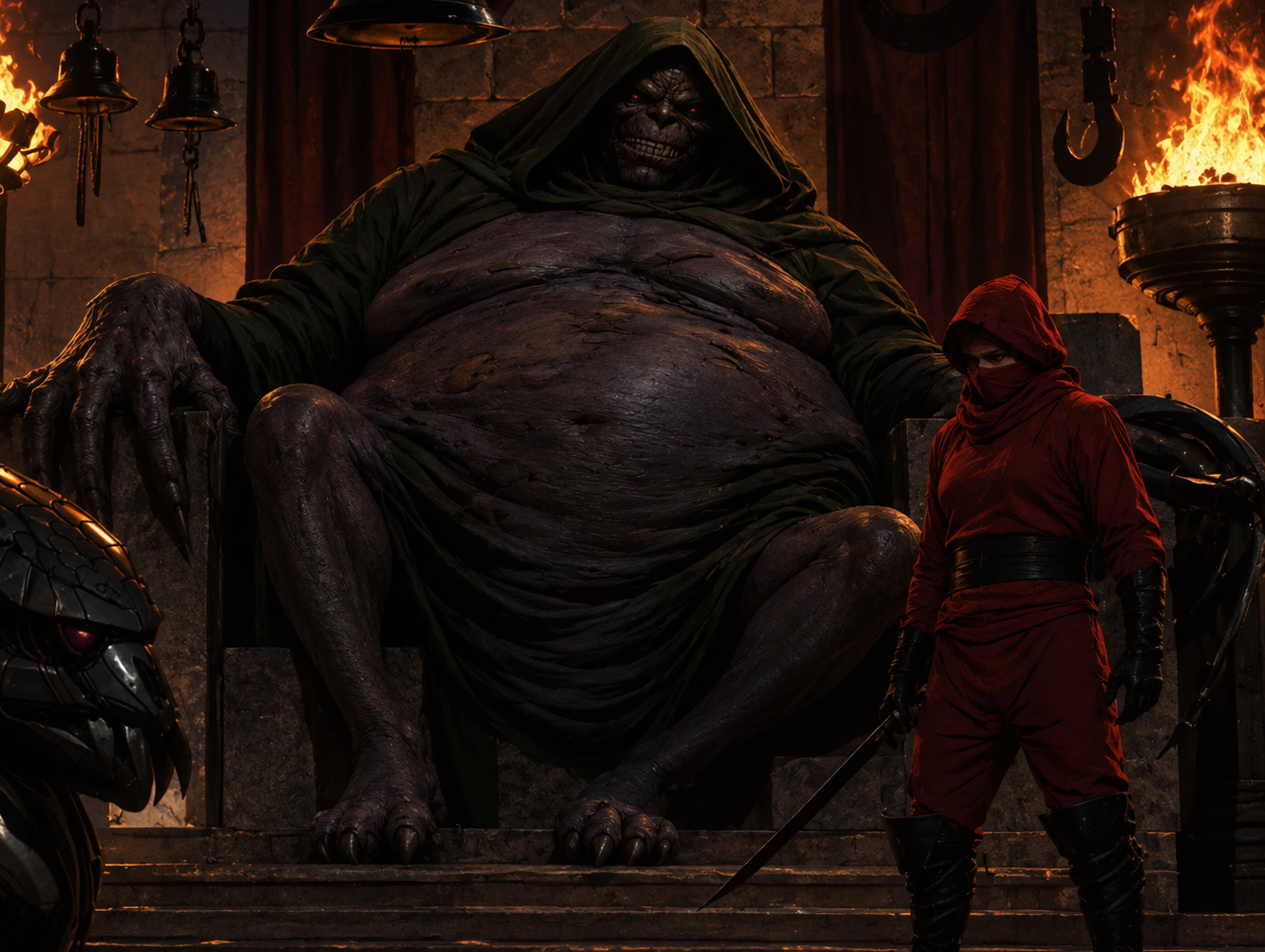
An ancient death cult of assassins bound to a demon-god known as the Beast.
Death holds no permanent grip upon them. A slain agent of the Hand may be dredged back through blood ritual, dragged screaming from whatever lies beyond, and returned to the fight with the mind hollowed clean of everything but obedience. For centuries, the Hand has existed as a weapon for hire, passing from empire to empire and master to master so long as the price was sufficient. Beneath the commerce, however, was always the same devotion: the cultivation of death until nothing remained but stillness. The Hand does not worship death as an ending, but as a no-state of perfection.
Krakoa presents an intolerable contradiction. Regenesis has made death permeable without the Hand's rituals, returning the dead to themselves rather than reducing them to obedient vessels. A mutant may die and yet remain whole; their memory, identity, and will may cross the threshold and return intact. To the Hand, this is not resurrection. It is contamination. Every mutant restored to life is another soul stolen from the Beast, another death denied its finality. Krakoa has created, perhaps inadvertently, an ecosystem in which the Hand's greatest sacrament has become obsolete.
The Hand therefore does not seek merely to destroy Krakoa. It seeks to interrupt its cycle. Assassinations are performed not for their victims, but for what follows: bodies defiled, resurrection sites corrupted, genetic remains harvested, rituals enacted where the dead are meant to return. Their objective is to make death permanent again. Every mutant they prevent from returning is, in the Hand's eyes, a small restoration of the natural order. And as Krakoa continues to bring its dead home, the Hand becomes increasingly convinced that the island itself must die.